

ILLINOIS SPRINTS TO LOWER NEW SNAP COSTS WITHOUT BOOTING PEOPLE WHO NEED IT
CHICAGO TRIBUNE
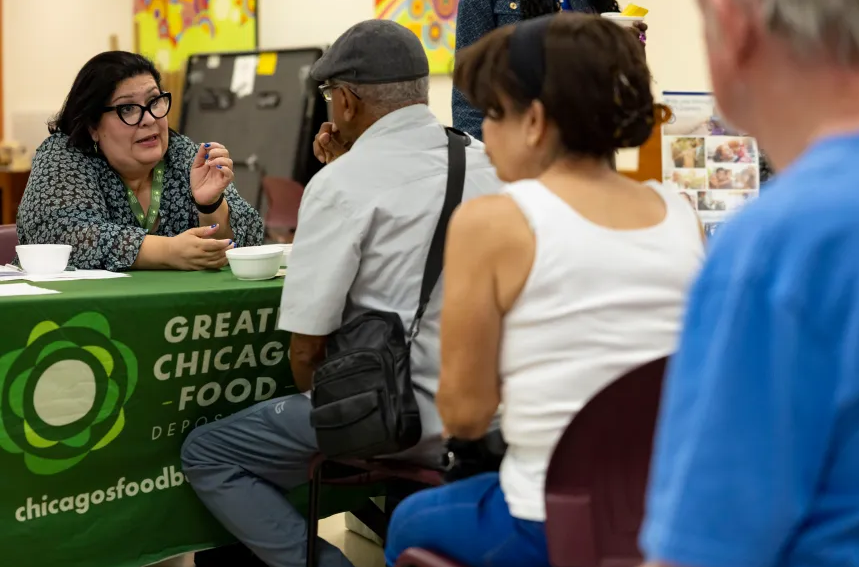
As an outreach coordinator for one of the Chicago area’s largest food banks, Joann Montes is already seeing an impact from President Donald Trump’s reductions to public assistance programs even before those cuts take effect.
Anxious older adults who for years received what were once called food stamps are approaching Montes at senior centers to ask if those benefits will continue and whether they’ll have to return to jobs “to be able to feed themselves.”
“Our folks who are 60 and older are asking questions about whether they’re going to be able to receive SNAP,” Montes, who works at the Greater Chicago Food Depository, said about the Supplemental Nutrition Assistance Program. “Will they have to go back to work?”
A little more than a month after Trump signed into law a sweeping Republican domestic package that expanded work requirements for SNAP benefits to previously exempt groups such as adults ages 55 to 64, the state and people receiving benefits are getting ready for a recalibration.
Democratic Gov. JB Pritzker’s administration is sprinting to figure out how to avoid a potential $700 million price tag by changing operations to achieve a level of payment accuracy that the vast majority of states currently do not meet. At the same time, Illinois also must handle the federally mandated work requirements on new groups that experts say could lead to people losing benefits.
“It would be almost easier if the federal government just did what they set out to do, which is say, ‘You are no longer going to be eligible for this program.’ But instead, they are putting states on the front line to create bureaucratic barriers to turn individuals and families away,” Grace Hou, the deputy governor covering health and human services, said at a panel discussion in Joliet on Friday. “These cost savings in the Trump spending bill will result in families getting kicked off their benefits because they can’t manage the red tape.”
In all, about 1.9 million Illinoisans receive aid through SNAP, which provides assistance for low-income families to buy food. The program’s benefits have been fully funded by the federal government for six decades, while the administrative costs have been split between the federal government and states. Monthly benefits in Illinois among people receiving assistance averaged $192 for each member of a household in fiscal 2024, or $6.33 per day, according to the Center on Budget and Policy Priorities, a progressive think tank.
But state officials say the changes written into the new federal law could place hundreds of thousands of Illinoisans at risk of losing those benefits. That jibes with a recent Congressional Budget Office report that estimated about 2.4 million fewer Americans will receive food assistance as a result of the new work requirements.